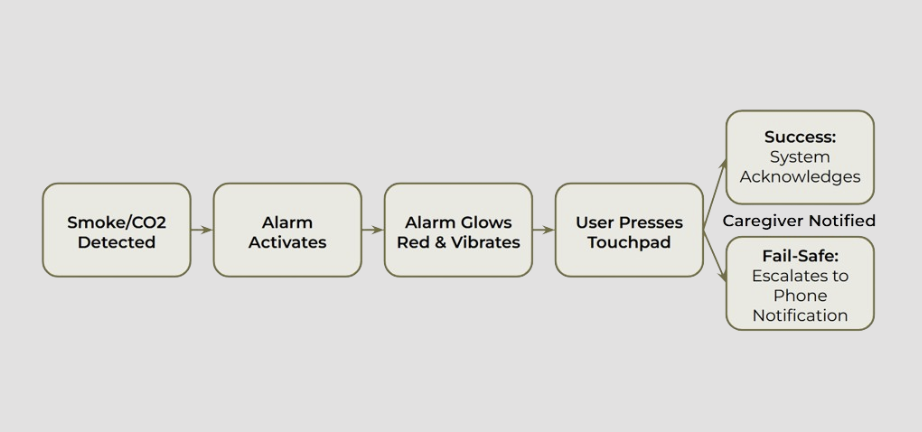
Current alarms rely heavily on high-frequency sounds and small visual cues, which don’t address age-related hearing loss or low-vision conditions.
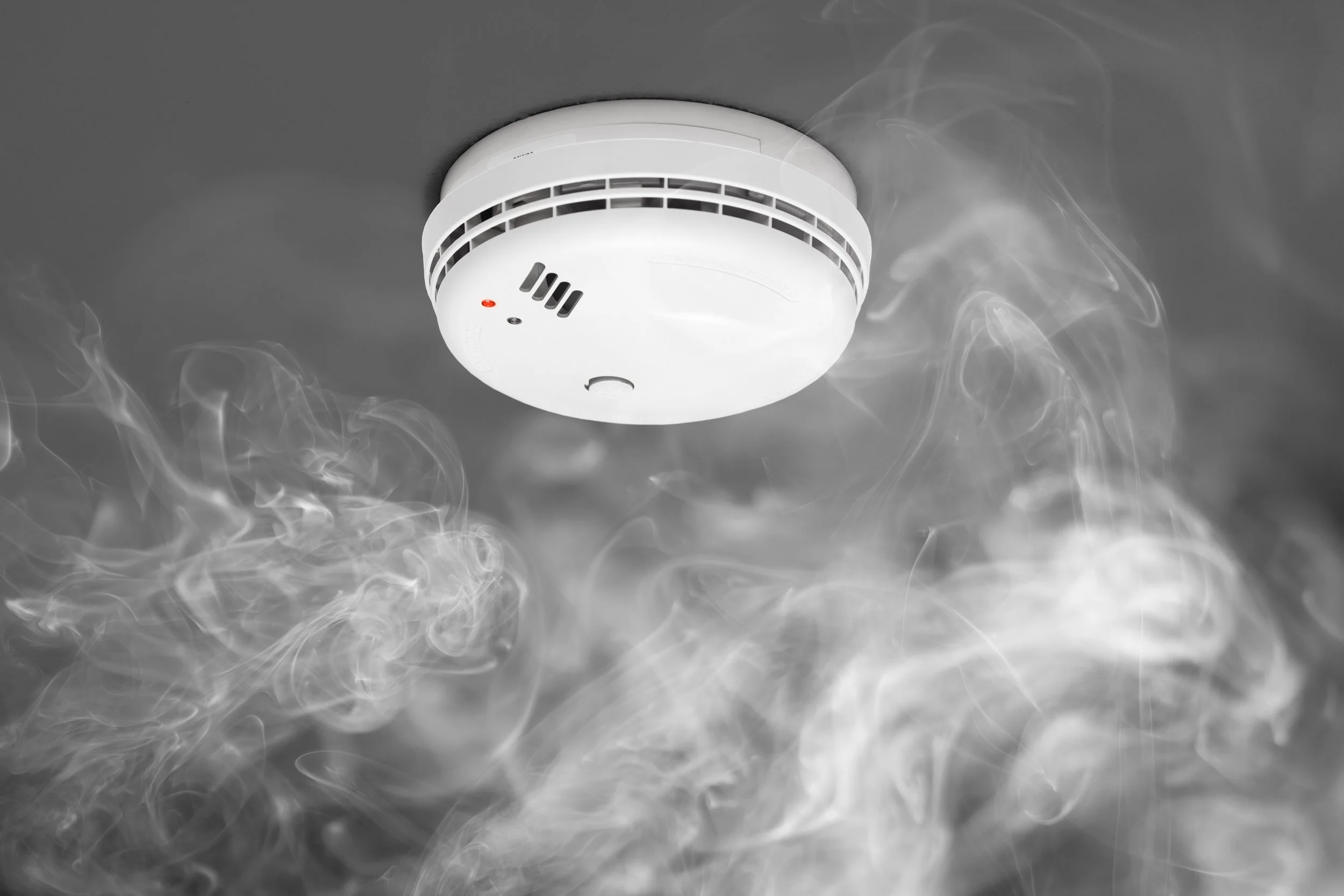
Event Trigger: Home fire or CO₂ leak while user is asleep.
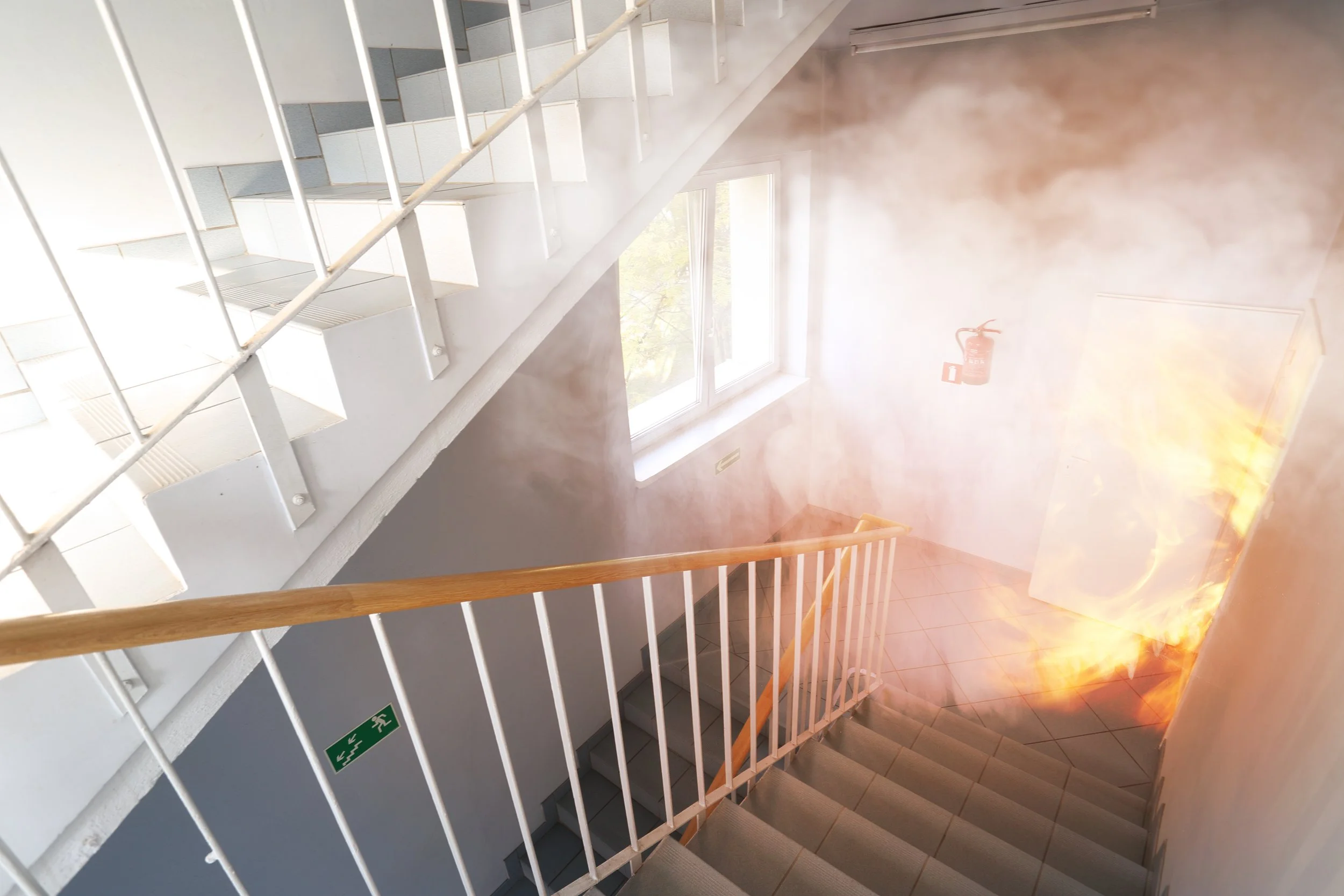
Context: Fires and CO₂ incidents disproportionately affect seniors; many alarms fail to wake older adults, especially those with sensory impairments.

Statement: Older adults with hearing and vision impairments lack a reliable bedside alerting system that combines multi-sensory cues with intuitive, accessible controls.
Ergonomical Analysis
Visual
Display:
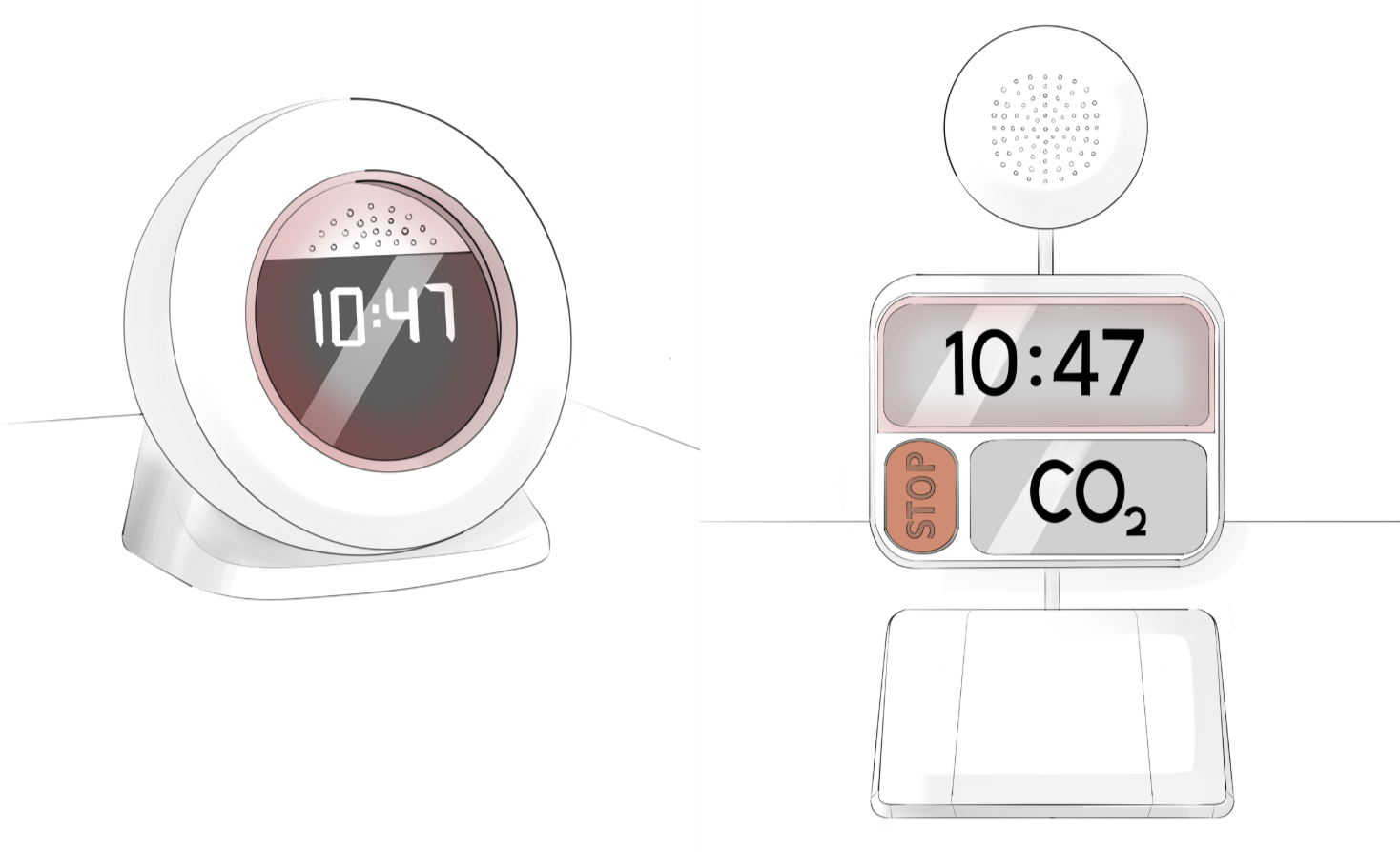
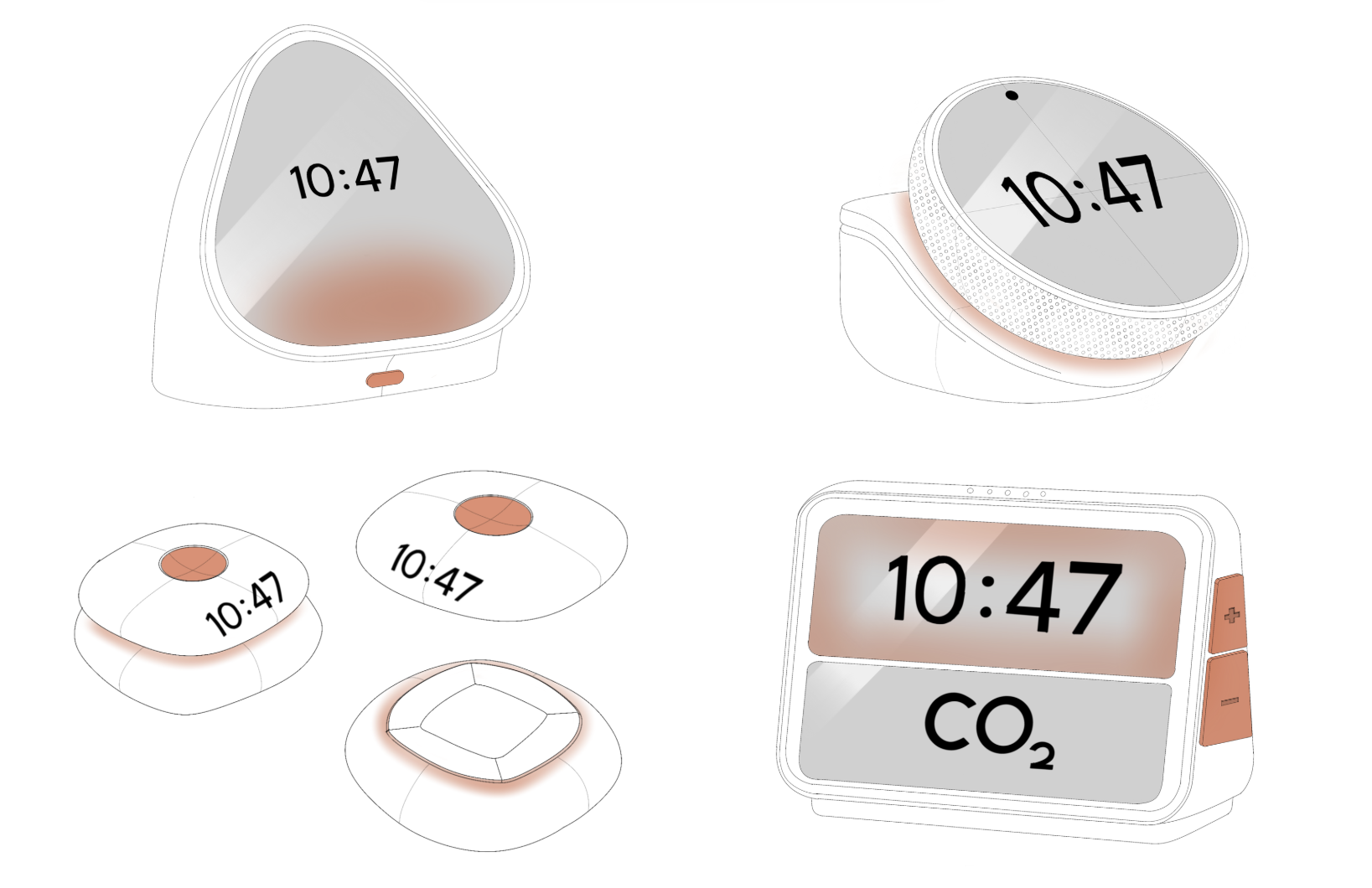
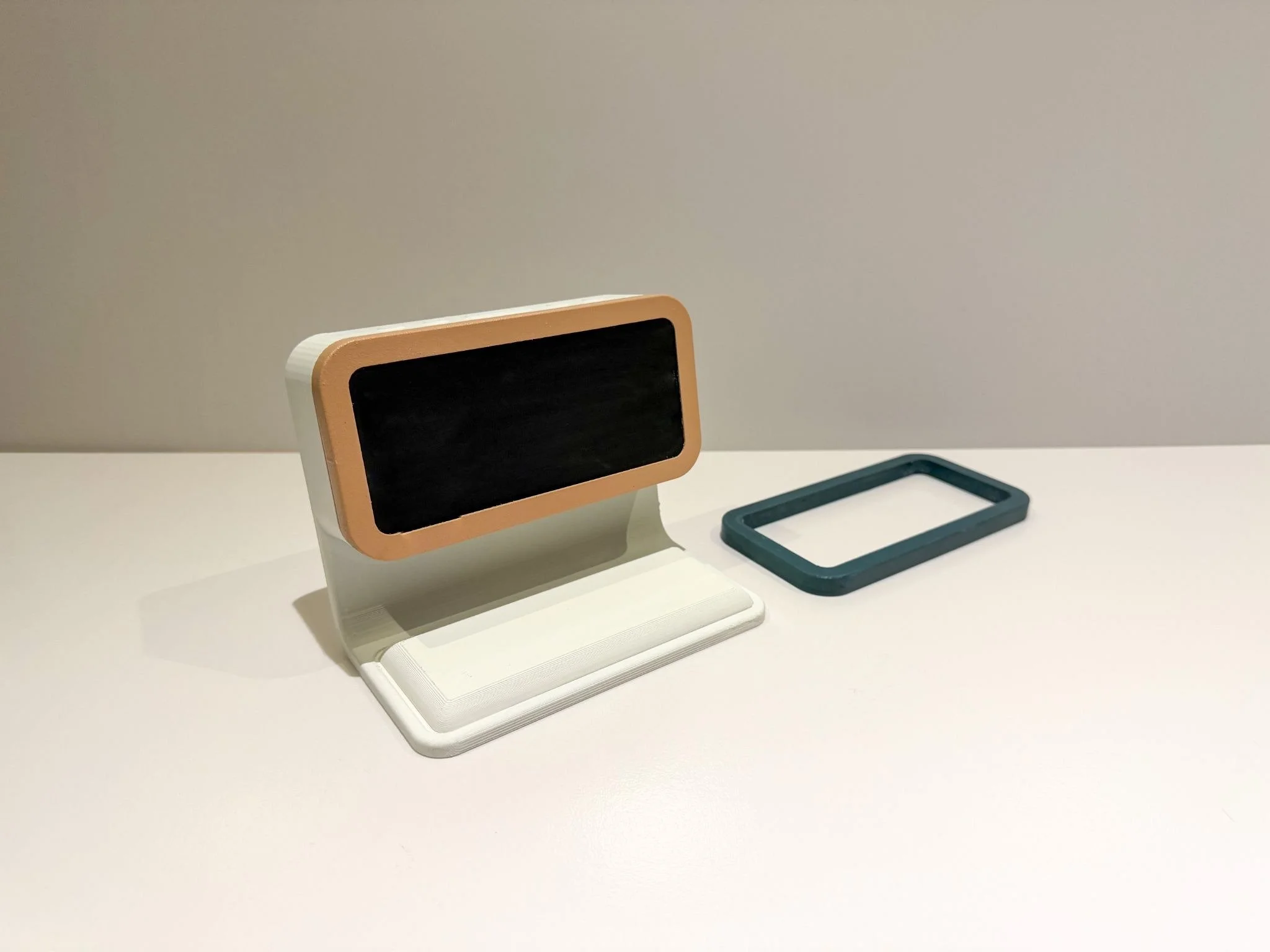
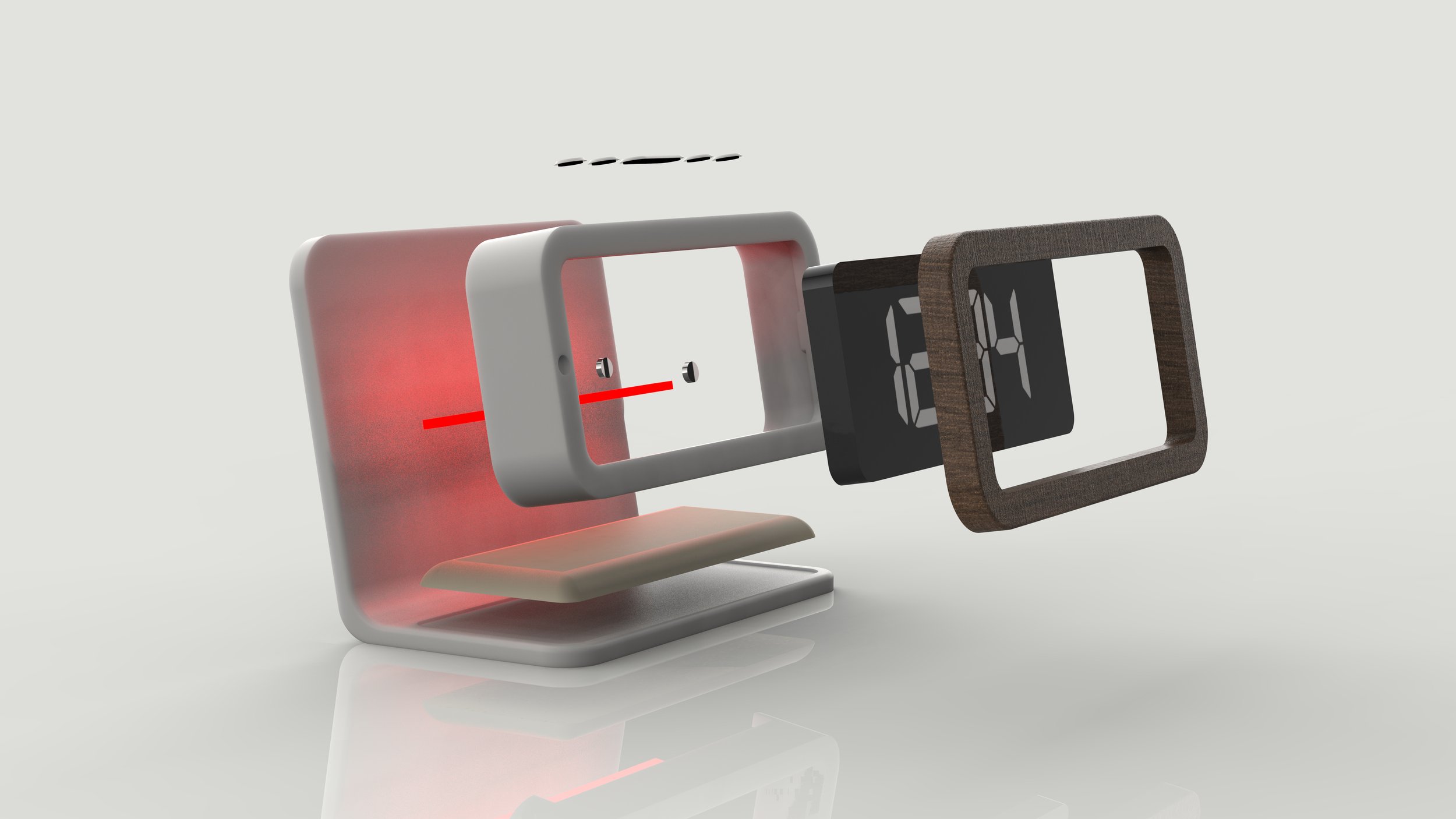
High-contrast (black text on white/amber background).
Lighting:
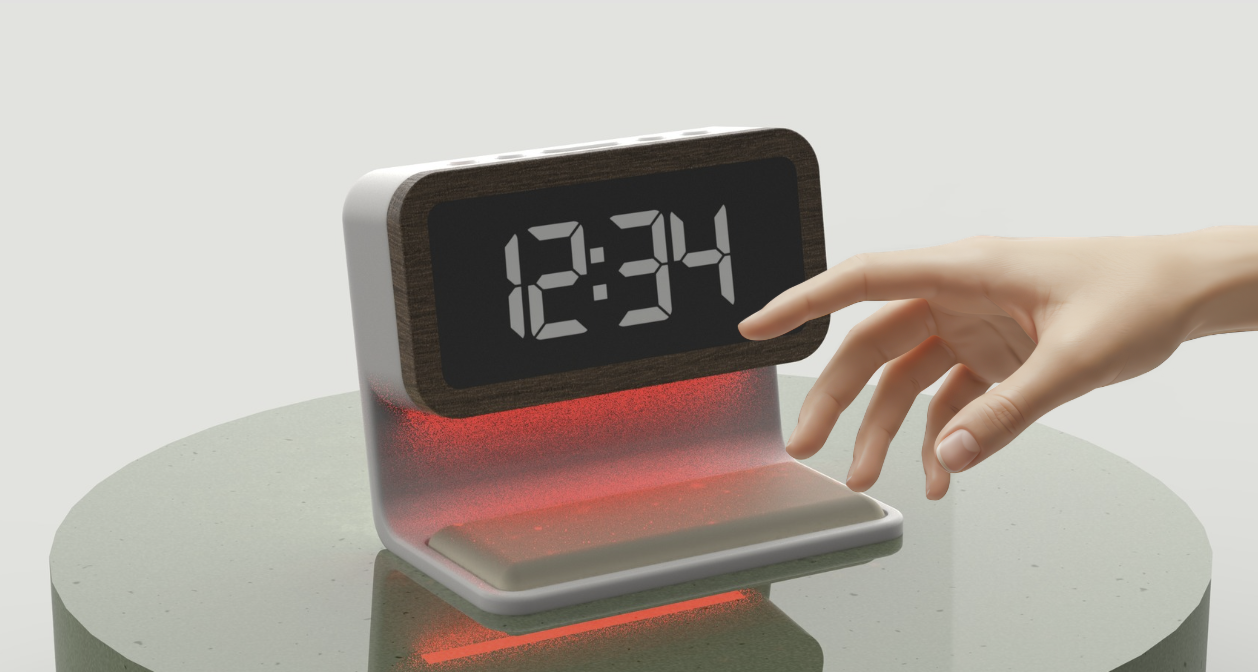
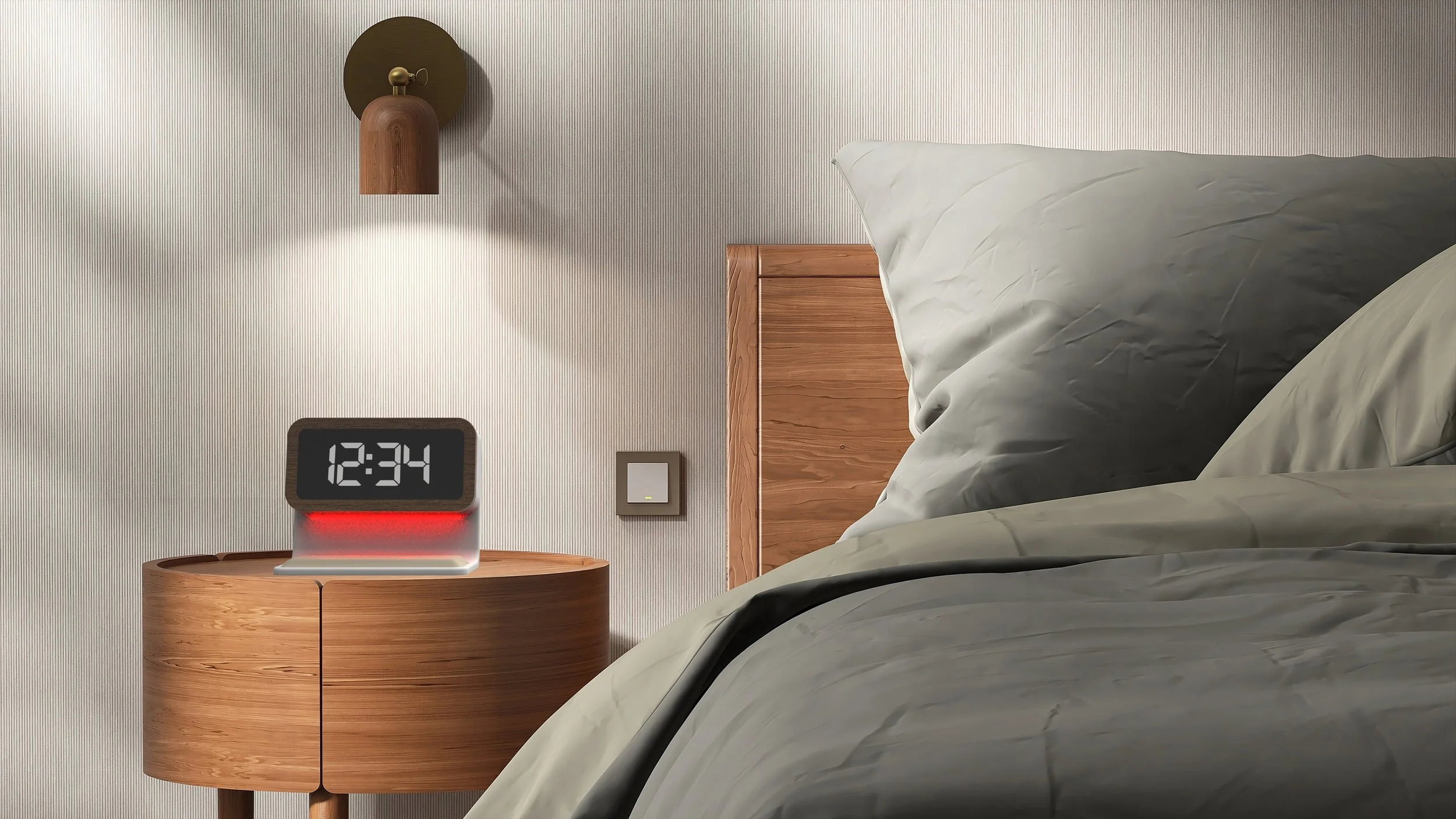
Ambient red glow during alarm, easily perceived by those with peripheral or reduced central vision.
Physical
Touchpad Design:
Oversized (minimum 4” width) for easy targeting, even with reduced dexterity or tremors.
Soft silicone with tactile ridges and embossed “STOP” lettering for confirmation by touch.
Hearing
Alarm Tone:
Low-frequency tone at 520 Hz, clinically proven more effective for waking older adults with hearing impairment than high-pitched chirps.
Placement
Device Placement:
Designed for bedside reach: alarm sits on the nightstand within arm’s length (50–70 cm).